When I was 55, I decided to devote the rest of my life to the spiritual. For me, this is Buddhism. My introduction to Buddhism unfolded slowly.
In October 1987, I was asked to be a decorator on a lovely property in Belgravia, London, which was owned by the heir of one of the world’s most known brands. I spent about 1.5 months with a small group of other decorators working on the property. While in London, I would see shop windows advertising flights to every corner of the world. At this time, I was a relatively reserved and a very unworldly 22 year old. I was captivated by the adverts.
Over the next two years, I ventured to various European countries, from the Artic Circle to Hungary. On 1st January 1990, I flew to Bangkok, Thailand, for 10 days on route to Australia and New Zealand. This was my first ever flight, and it was also to my first destination outside of Europe. I was introduced to a different world. This was not only my first experience of Asia but also of Buddhism.
At the time, those travelling to such destinations were mainly northern Europeans, Canadians, Aussies, and Kiwis. While there were many Brits, I quickly observed that 99% were from the south, and few were working class. For a working class northern lad everything that surrounded me was a world I knew next to nothing of. Although, at that time, Buddhism was just an observation of Buddhist monks walking about, but my love of Asia grabbed me immediately. For years afterwards, I never experienced winter in the UK.
In 1994, I visited Porbander, India, the birthplace of Gandhi. I felt at one embracing Gandhi’s simple living. Back in the UK, I started to visit a local Buddhist Centre. In 1997, this was the place Ruth and I met.
My Buddhism remains very much enshrined in a KISS (keep it simple stupid) approach. A fundamental aspect of my Buddhism is walking meditations. Over recent years, I have engaged in my walking meditations on numerous visits and for many months at a time, in Lumbini, Bodhgaya, and Amritsar.
Lumbini, Nepal – birthplace of Buddha
I only recently visited Lumbini for the first time in December 2021. Since then, I have visited on seven occasions, while Ruth has visited three times. For Ruth and I, Lumbini is our second home. We have many friends in Lumbini, and there is excellent vegetarian food in the village. I expect Lumbini to expand rapidly in the coming years.

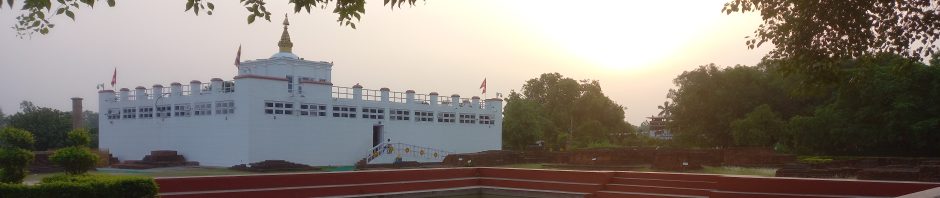
The Maya Devi Temple is the place where I developed my walking meditations. Each morning, I spend about an hour circumnavigating the temple pond twelve times. I estimate this involves over 3,500 steps. With the wonderful food and regular daily exercise, my health and fitness have improved dramatically since my first visit to Lumbini.
Unlike the Mahabodhi Temple, Bodhgaya, the Maya Devi Temple is deserted when it opens at 05.00. There are often no more than 10 people around the pond before 05.30. Indeed, in winter, I often enjoy an hours solitude around the pond.
Mobile cameras are permitted outside of the actual temple but not inside. Shoes must be removed. There is an entrance fee. I purchase the 12 day Meditation Pass for NRs1,000.
I have been blessed to visit many of the Buddhist sites around Lumbini. These are detailed in The Birthplace of Sakyamuni Buddha – Lumbini Nepal.
Bodhgaya, India – where Buddha attained enlightenment
I first visited Bodhgaya over 30 years ago and stayed in the Burmese monastery. Since then, there has been significant growth in Bodhgaya. The town is a lot bigger than Lumbini.
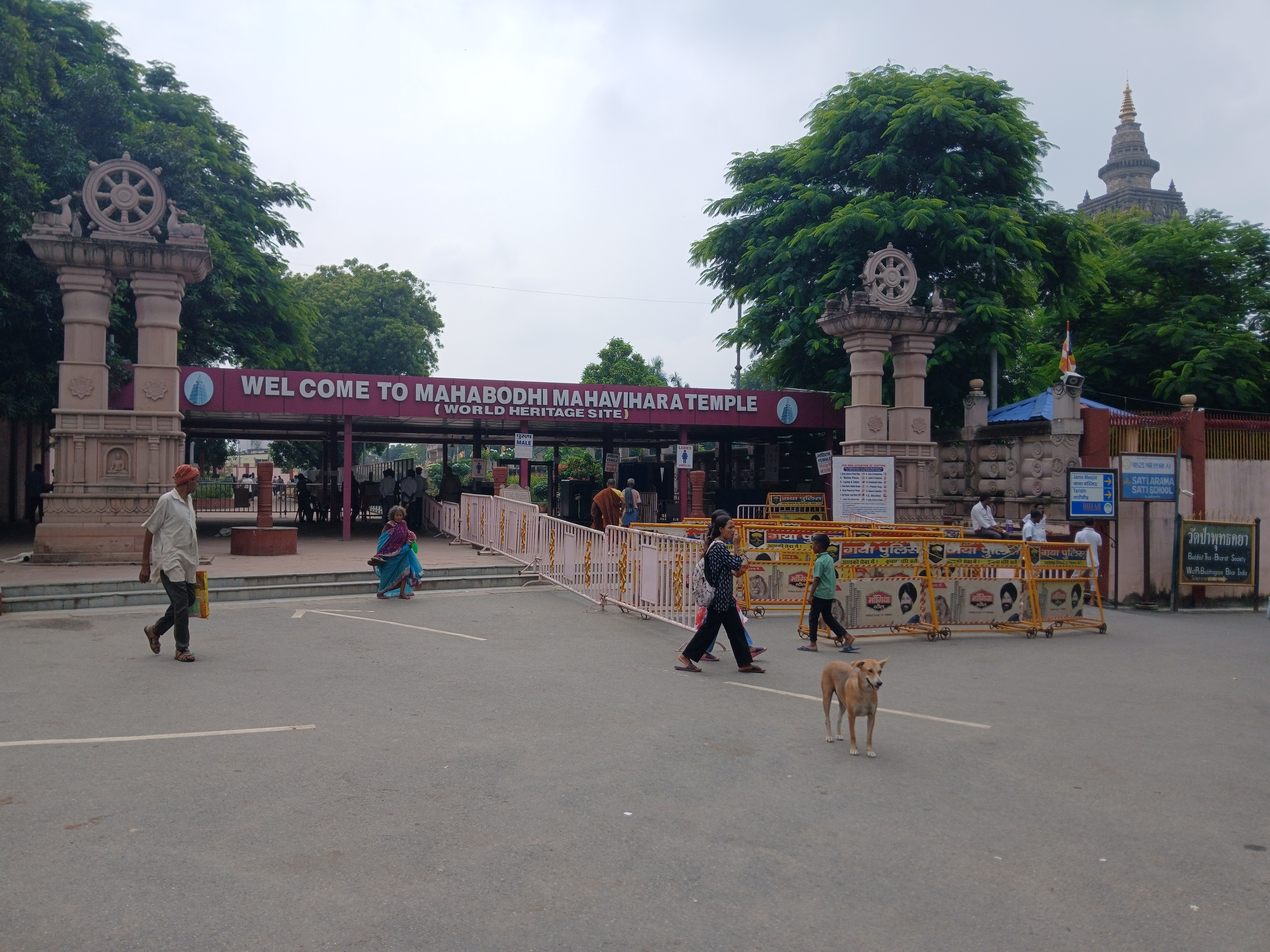
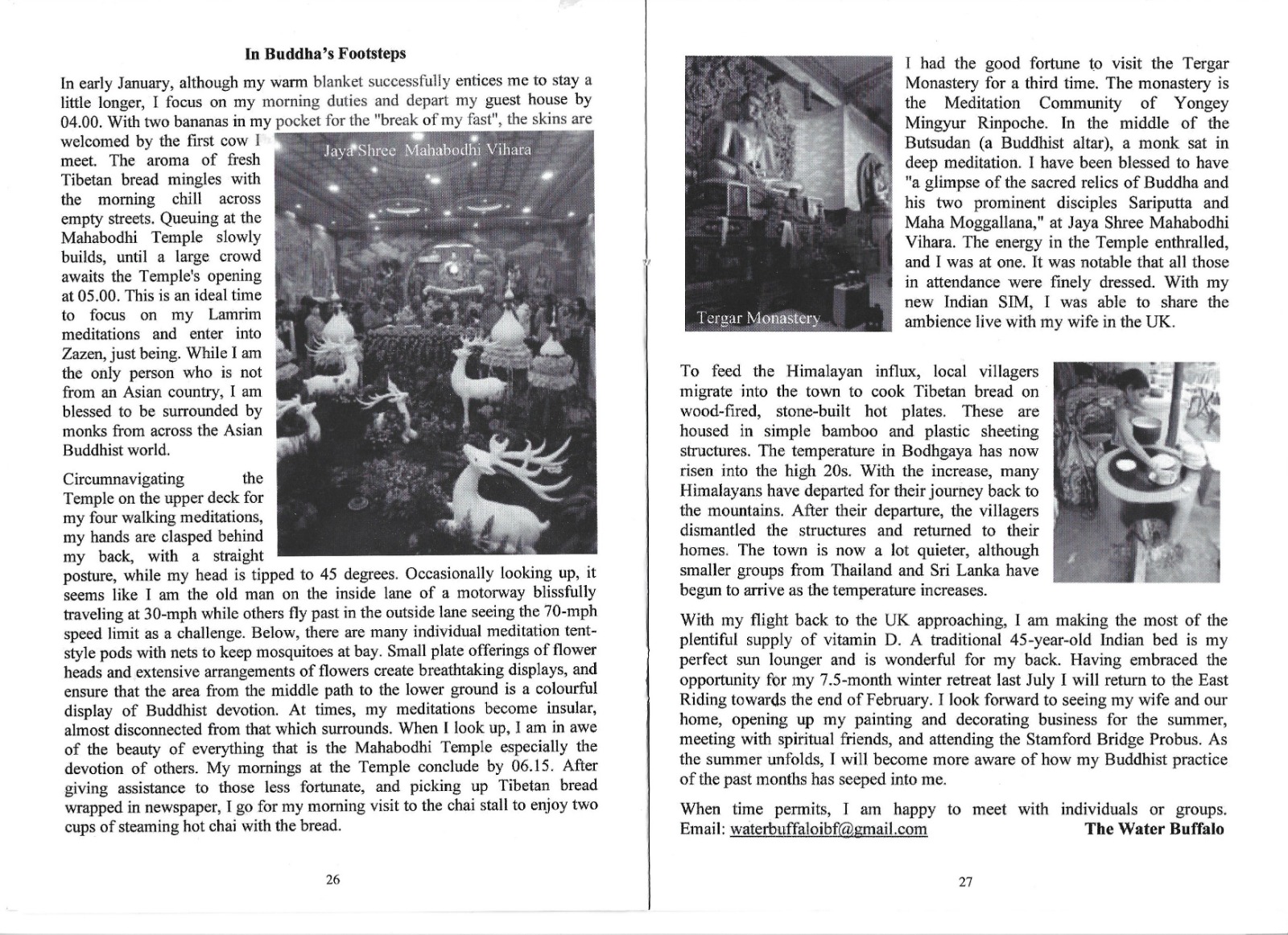
The Mahabodhi Temple is the place where I started to do my walking meditations. Each morning, I spend about an hour circumnavigating the temple four times.
In winter, Bodhgaya is very busy with devotees, especially from the Himalayas. I generally arrive at the Mahabodhi Temple just after 04.00 to queue up to await the opening at 05.00. The queue will often number over a thousand people each morning, with even more when the Bhutanese arrive.
In summer, the monsoon season, there are few people from the Himalayas. At this time, the main groups are from Sri Lanka and South East Asia. I generally arrive to queue at 04.30, and there are often less than a hundred people awaiting the temple opening. The humidity is very high, and many restaurants are closed.
While in winter, warm weather clothing is essential. During the monsoon season, if the heavy rain does not make your clothing wet, humidity will. Although there are challenges with the monsoon season, this is a wonderful time to spend in Bodhgaya.
While no mobiles are allowed inside the Mahabodhi Temple area, shoes can be worn on the upper footpath. There is no entrance fee.
I have visited Bodhgaya on five occasions.
Amritsar, India – spiritual centre of Sikhism
The third main place I engage in my walking meditations is not a Buddhist site. It is the Golden Temple in Amritsar, the spiritual centre of Sikhism, and it could be said that it is the spiritual centre of the world.
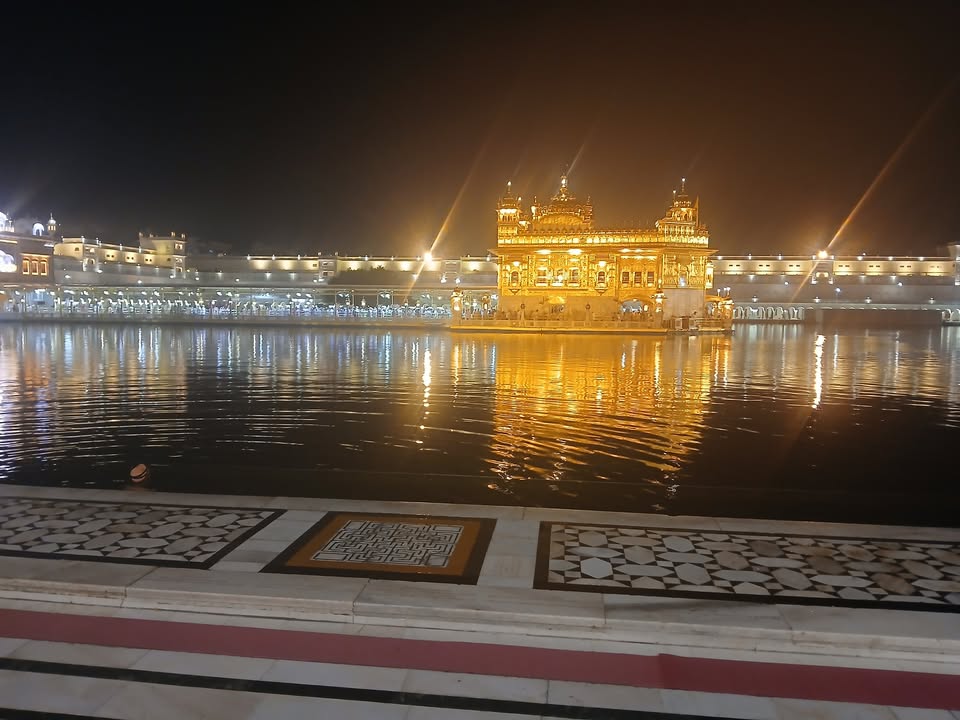
To be a Buddhist engaged in walking meditations, in the early hours, around the Golden Temple, while volunteers clean, is purely awe-inspiring. If ever there is a group of people who could move a mountain, you will meet them cleaning the Golden Temple at night.
The Langar embodies Sikh principles of equality and selfless service (seva) by having people from all walks of life sit together on the floor to eat as equals. The free, vegetarian meals are served to anyone, regardless of their background. They are tasty, wholesome, and simple. Prasad food at its finest. Donations are welcomed.
Although I am not a Sikh, I have a strong affinity to Sikhism. During warmer weather, I enjoy wearing a kurta. I always wear a kara, a steel bracelet that is one of the five “Ks” of Sikhism, and I often wear a patka.
Mobile cameras are allowed inside the Golden Temple area but not in the inner sanctum. Shoes and socks must be removed. A head covering must be worn. There is no entrance fee.
I have visited Amritsar on three occasions.
Further Information
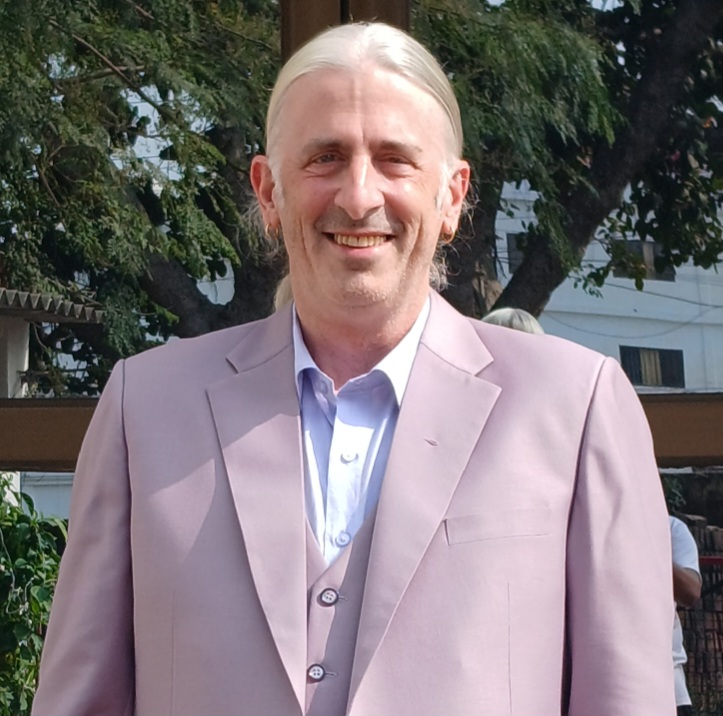


 Andy Strangeway
You must be logged in to post a comment.